
How have Reform UK managed to rise so much in popularity?
Sadaqat Islam
Consider the period just after the 2024 general election: a landslide for Labour. Scenes of jubilation and a promise: change. However, Reform UK were in the background with their first-ever seats in Parliament, albeit only five. At the time of writing, Reform UK has 26% on the voting intention poll whereas Labour has 19% (not so good for the party in power, one might add). Moreover, some evidence beyond polls to show that Reform’s support is indeed rising is that they now have 8 seats in Parliament. What I wanted to look into was how a party that started so lacklustre in support has become the most popular party according to polls; why are people turning to Reform?
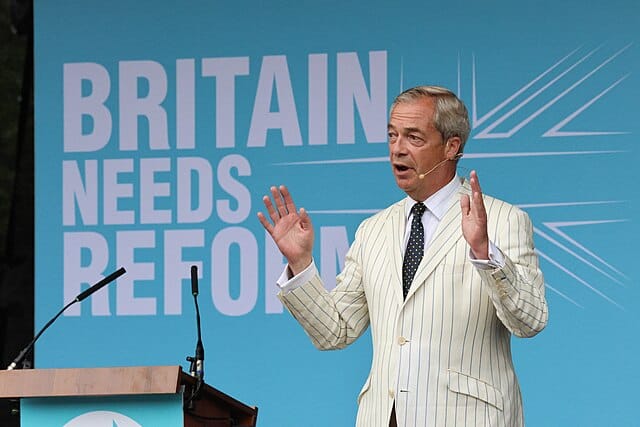
Thinking about the period preceding the 2024 general election, I cast my mind back to watching debates and remembered that Farage wasn’t considered much of a threat to the election battle. Their policies were deemed to be too radical, too far-fetched; Reform was laughed at by fellow panel members and deemed never too meaningful - but what they were ignoring was that Farage had gained quite a chunk of support.
Then came voting day: Reform gained just 5 seats, but the most notable thing to consider is how many votes they received. The incredibly low turnout, 59.7%, skewed the distribution of seats (as always a problem in our first-past-the-post system). Reform UK gained upwards of 4.11 million votes, surpassing the Liberal Democrats by nearly 600,000. However, astonishingly, the Lib Dems got 72 seats in total. The disparity between votes and seats for these two parties was huge - to put it into terms of voting share, the Lib Dems received 12.2% of the vote and got 72 seats whereas Reform UK got 14.3% but only 5 seats. Similarly, parties with much less of the vote gained more seats than Reform. This reflected the fact that Reform’s popular support was not represented by the 5 seats they gained. This unsilenced support could manifest itself later.
Reform UK has undoubtedly shaken the political landscape. They are, as polls show, the party that would (in theory) be the largest party following a general election if one were to be held tomorrow. How that would correlate into seats per the electoral system would remain to be seen, but right now the estimate is that they would be just short of a majority, which is quite something for a party who only hold 8 actual seats at the time of writing.
Now for their actual policies. They are perhaps characterised by their stance on immigration, which would have been seen as perhaps quite extreme in 2024, but it definitely appealed to people. Policies such as ‘zero net migration’ and freezing ‘all non-essential immigration’ attract people as it relays the economic benefits for the country too. Reform claims that ‘over 10 years, this programme (namely, the deportation of illegal migrants) will lead to a net saving of £42 billion for the taxpayer’. They garner the support of people who are looking for something to blame, listening to Farage’s propositions that the healthcare system, the education system and general public services are crumbling because of too many people putting a strain on the country.
Their radical views on the NHS and education also promise to be much more than any other party; certainly more than what they say is a slow Labour that is not doing enough.
Another reason that people are turning to Reform is that they have ‘clean hands’ politically, connecting to young people who feel betrayed and others who are disconnected from the Labour Party. This is in contrast with the Conservatives, as people vividly recall the ‘Trussonomics’ of 2022, the disastrous mini-budget and Boris Johnson’s resignation prior to that. People haven’t seen Reform in power, which allows them to criticise other parties (i.e. Labour and the Conservatives) freely and promise hard-hitting change that people would want.
All this may follow political polarisation as a whole, and of course it is not uncommon for the public to turn to more ideological extremes if they are frustrated with the incumbent government and central parties. Reform has successfully drawn support away from Labour as they are just more radical. Reform is hard-hitting and at least focused on their policies and aims, as opposed to Labour who are finding themselves straddling this ugly political middle ground.
In conclusion, Reform UK has rightfully captured the popular support of Labour voters and more generally secured the interest of the public who are dissatisfied with the government and Labour’s failures. Their views on immigration and their quite vocal criticisms of the government have drawn the disillusioned public in. I will not go into my more personal views on the matter of whether Reform’s policies would actually be able to be implemented well and whether I agree with what they stand for, but it must be recognised that without a doubt they have seen a surge in support and many people are turning to them.
Reform UK aren’t just the spoiler party anymore; not just the alternative, right-wing vote. Some dire situations have led to this, yet their support only seems to keep growing.



Comments ()