
Would You Trust a Machine to Work on Your Body?
Nico Bains
The idea of a robot handling your medical care used to be the stuff we witnessed in sci-fi movies, usually the kind where things go terribly wrong. However, today, this is no longer fiction. From automated surgical arms in operating rooms, to AI algorithms diagnosing skin cancer, machines are moving rapidly from the tech lab to the clinic. This issues a pressing question to the patients of modern medicine: Would you actually trust a machine to work on your body?
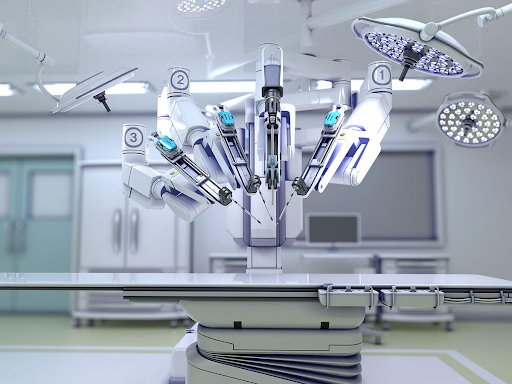
The biggest argument for allowing a robot to take the scalpel is that humans are inherently limited by biology. We get tired, our hands can shake, and we have off days, whereas machines do not. Robotic surgical systems allow doctors to perform incredibly complex procedures through tiny incisions by translating a surgeon's hand movements into micro-movements inside the body, completely eliminating natural human tremors. Because this robotic surgery is often minimally invasive, patients usually experience less pain, less blood loss, and much faster recovery times compared to traditional open surgery. In addition to this, an AI assistant can scan millions of medical records and patient outcomes in seconds to help a doctor choose the absolute best treatment plan, essentially giving medical professionals technological superpowers.
Despite these massive benefits, it is completely natural to feel a wave of anxiety at the thought of a cold, metallic arm hovering over you. Medicine is deeply personal, and when people are vulnerable, they want empathy, eye contact, and a reassuring voice. A machine can deliver flawless stitches, but it cannot hold a patient's hand or understand human fear. There is also the lingering worry of technical failure; apps crash and hardware malfunctions, and even though medical robots have intense backup systems, the thought of a software bug happening mid-procedure is terrifying. Additionally, the legal and ethical frameworks are still catching up to the technology, leaving difficult questions about accountability if an autonomous machine makes an error.
The reality of modern robotic medicine is that the robots are not flying solo. Almost all medical devices and robotic systems used today are entirely controlled by highly trained human surgeons who use the machine as a high-tech tool rather than letting it act as an independent entity. The future of healthcare is not a choice between a human doctor or a robot, but rather a partnership where the machine brings pinpoint accuracy and data, while the human doctor brings judgment, ethics, and emotional care. Ultimately, if utilising a machine means a smaller scar, less pain, and a lower chance of human error, the choice becomes much easier, provided a human is watching the screen and holding the controls every single step of the way.
Comments ()