
Climbing the Career Ladder: Do Women Have to Leave Family Behind?
Sonam Soar
For hundreds of years, women have been told they can ‘have it all’; a successful career and fulfilling family life. In practice, many still find these two ideals difficult to balance. Despite the progress towards gender equality, women continue to face challenges that often make them choose between climbing the career ladder and caring for their families. So, can a woman really have it all? Or is it just a fantasy that millions of women crave but will realistically never have?
“Equality will come not when women change, but when work changes.” - Claudia Goldin
Even today, when women are told they can ‘have it all,’ the reality is much more complicated. It is not just that this ideal is unrealistic - it is that the systems around work and family have not changed fast enough to match women’s ambitions. Looking back over the last hundred years, each generation of women pushed their expectations further, but workplaces did not evolve at the same pace. In the early 20th century, women were denied both long careers and control over their family lives. Today, women are technically allowed to pursue both, but they are often expected to manage them at the same time within structures built on the assumption of constant availability. We talk about ‘choice,’ yet those choices are still shaped by limits women didn’t create.
The shift from ‘family then job’ to ‘career then family’ is real progress, but it also shows how fragile that progress can be. Women now plan their lives around steady employment, but many modern jobs - especially the highest-paying ones - still demand long, rigid hours that only work if someone else is handling the domestic side. This is what Goldin, in her book ‘Career and Family’, refers to as ‘greedy work’ - jobs that reward total availability and disproportionately penalise anyone (often women) who need flexibility. The issue is not a lack of commitment from women; it is that the biggest economic rewards come from jobs that expect total dedication. If a woman steps back for her family, her future earnings and opportunities often take a lasting hit. But if she does not, she ends up doing what is essentially two full-time roles. Neither option feels like ‘having it all’; both feel like compromises. This tension becomes clearest with the arrival of a first child. Up to that point, men and women often seem to have equal footing. But once caregiving needs increase, their paths start to diverge. In many families, the partner with the ‘more flexible’ job takes on more of the childcare - and that partner is still usually the woman. It feels like a practical, personal decision, but it is actually tied to a larger structural problem: the labour market rewards uninterrupted work, so families naturally protect the job that pays most for those hours.
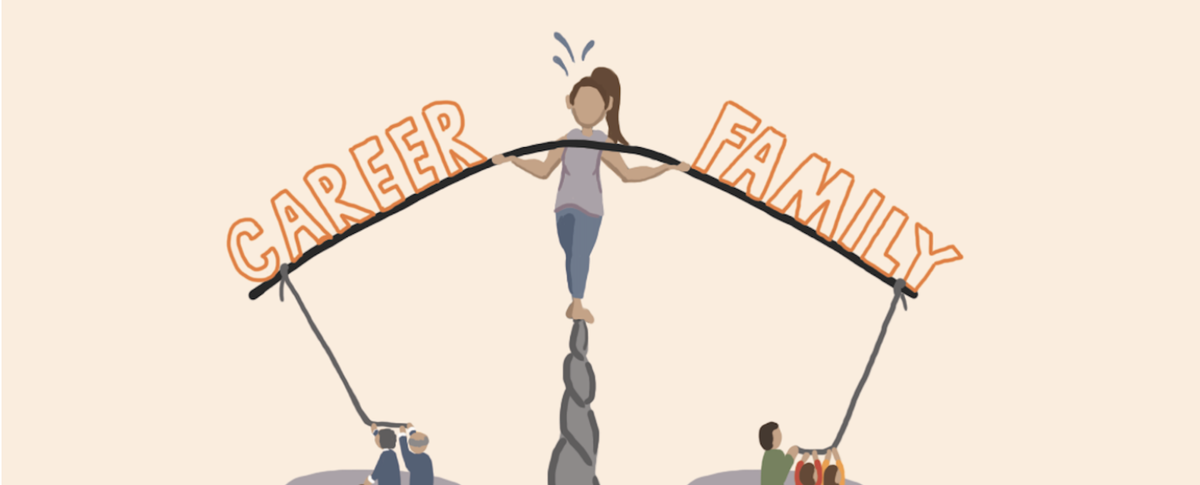
So, can women actually have it all? In some ways, yes. Many women today expect both a satisfying career and a meaningful family life, and plenty manage some version of that balance. But the remaining pay gap, the pressure around fertility timing, and the unequal distribution of caregiving show that the ideal still comes with conditions. It requires a partner who shares care equally, an employer who does not punish flexibility, and a society that offers reliable childcare and predictable leave. When any of these pieces are missing (and they often are), the extra burden usually falls on women. The truth is that women can ‘have it all’, but only when work stops demanding all of them. Jobs that rely on rigid schedules and constant presence for her family make balancing career and family feel like walking a tightrope with either side constantly pulling her down. But when work is organised around output instead of hours, when flexibility doesn’t mean sacrificing ambition, and when caregiving is treated as a shared responsibility, the question itself loses its power. ‘Having it all’ should not rely on extraordinary effort; it should come from systems designed for the lives people actually live.
Therefore, the fantasy is not that women can combine career and family - it is that they can do so within systems never built with them in mind. The challenge ahead is to redesign those systems so balance becomes normal instead of exceptional. Only then will ‘having it all’ feel less like an impossible promise and more like a standard expectation for everyone.



Comments ()