
President Trump’s $100,000 Visa Fee - Shielding America or Weakening Its Technology?
Rahul Jeyanand
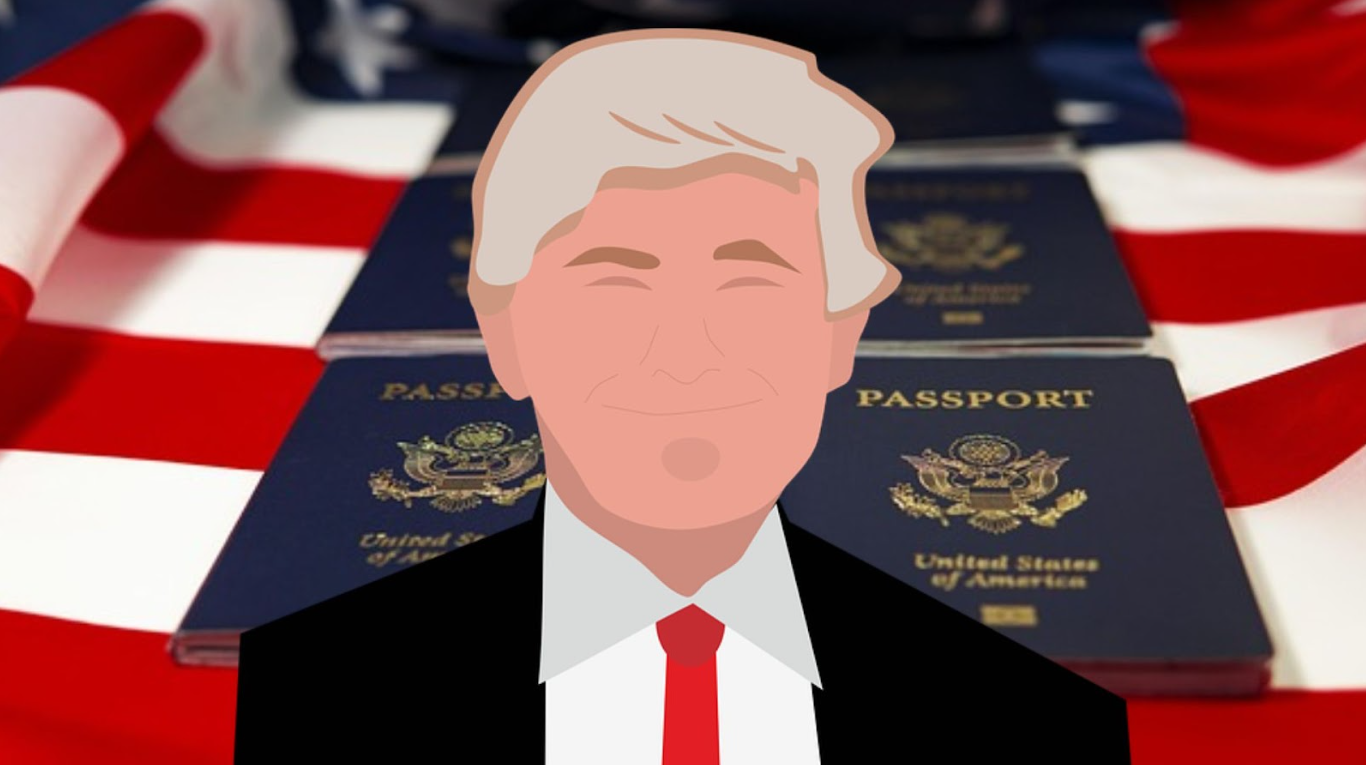
On September 19th, U.S. President Donald Trump signed a Presidential Proclamation entitled ‘Restriction on Entry of Certain Nonimmigrant Workers’. The proclamation imposed a $100,000 dollar fee which firms must pay for every new H-1B visa petition from midnight on the 21st of September. A non-immigrant visa, the H1-B program gives American firms the right to temporarily hire foreign workers for specialised occupations, defined by the U.S. Department of Labor as ‘one that requires the application of a body of highly specialized knowledge and the attainment of at least a bachelor’s degree or its equivalent’. The program allows U.S. firms to hire people from abroad with unique, yet valuable skillsets, and is particularly important to the technology sector due to its need for individuals with extensive knowledge in specific fields. Following the proclamation, uncertainty has grown over the long term effects that may beckon for the American technology industry since it makes hiring foreign workers more expensive and some of the biggest companies in the world, such as Amazon and Google, are beneficiaries of the scheme. Some do support it, however, with the view that firms can no longer abuse the scheme by hiring foreign nationals on lower wages, an idea that was referred to within the proclamation itself. Amidst the debate, an urgent question has emerged - has President Trump’s actions protected the jobs of American workers, or has it started to hold America back in the technology and innovation sector?
One reason for why people support the amendments to the H-1B programme is due to the job security and accessibility it offers, particularly for recent graduates. In the proclamation, the President claims that IT firms have ‘prominently manipulated the H-1B system’, implying that firms replaced U.S. employees with foreign employees on lower wages using the visas, rather than using them to supplement their domestic workforce. A report by publishing group Springer Nature in 2024, on whether accountants on a H-1B visa have different wages, used payroll data from a ‘Big 4’ accounting firm, eventually concluding that for the same position, accountants with H-1B visas have a starting salary that was 10% lower than a U.S. citizen’s. As a result, American graduates have struggled with finding employment, as firms would naturally prefer workers with a H-1B visa who demand lower wages. Therefore, the introduction of such a large fee for new petitions may deter American firms from hiring foreign nationals, instead pushing them to invest in training and hiring more American workers. As the demand for domestic workers grows, they become more able to negotiate their wages, leading to a stable rise in salary that would at least match inflation. Disposable incomes would rise, which in turn would raise consumer spending, prompting firms to reinvest in capital and employees, further driving economic growth.
Another reason that may explain the restriction would be that President Trump was acting in the best interests of National Security. This is because many renowned tech firms, such as NVIDIA and Cisco, rely heavily on sponsoring H-1B visas, and their contributions are not just needed for economic growth, but also for cybersecurity. This has led to concerns, largely from Republicans, that foreign involvement in such vital industries may risk espionage or property theft. In a fact sheet released by the White House along with the proclamation, it is said that one of the reasons for the change was to ‘protect our [American] national security’. Therefore, the implementation of the $100,000 charge ensures that firms only hire essential labour, limiting the foreign influence in the technology industry. This relates to the rest of President Trump’s ‘America First’ agenda, which prioritises American interests, and includes the reciprocal tariffs announced earlier this year. This would also encourage more investment in defence and security technologies, creating more high-paying jobs across America.
There is, however, an argument that the changes to the H-1B program will restrict American innovation. The H-1B program is frequently used to employ foreign talents in fields such as artificial intelligence and data science, where there is a limited amount of expertise that cannot be replaced easily. According to the Institute for Progress, 60% of American firms featured on the 2025 Forbes Artificial Intelligence 50 List had at least one immigrant founder. One example is Elon Musk, a founder of Open AI, who was previously the de facto leader of the Department of Government Efficiency. Musk has been a staunch supporter of the programme, likening its benefits to a sports team recruiting the best talent available globally in a previous post on X. Shortages of skilled labour in such crucial fields may lead to wage inflation for those existing specialists as well as a decline in productivity, causing the U.S. to potentially fall behind other nations in terms of technological development. Therefore, tighter restrictions may push firms to think about investing abroad in order to retain skilled workers, possibly erasing America’s edge in the technology sector as a result.
Another adverse effect of the amendment to the H-1B programme is that it can act as a catalyst for economic inequality across America. Certain areas, such as Silicon Valley and Austin, sponsor particularly high numbers of H-1B visas due to the high concentration of firms which specialise in technology, creating a need for high-skilled workers, resulting in these areas being disproportionately affected by the wages and tax revenue generated by the technology sector. In the fiscal year 2025/26, it was found that California and Texas made up over 42% of all H1-B petitions, which indicates that these states are highly dependent on the visa programme in order to sustain economic growth. Therefore, President Trump's changes will certainly impact the hiring strategies of tech firms, yet not every area will bear the same economic decline, thus creating varying patterns of economic growth between these tech-heavy states and the rest of the nation.
With all factors being considered, the ‘Restriction on Entry of Certain Nonimmigrant Workers’ does protect America to an extent, in regard to providing increased job security and bolstering national security. These benefits, however, are outweighed by the drawbacks the proclamation also creates, namely reduced technological innovation and economic inequality across the nation. Though the policy does fall in line with President Trump’s ‘America First’ agenda, it directly compromises its aim of having a strong, independent economy. It is key to have jobs for graduates and solid national security, but not by sacrificing America's technological edge nor risking the future of its most economically prosperous states.

Comments ()